Business continuity planning covers servers, offices and suppliers. It rarely covers travel. Then a labour dispute, a storm or an outage grounds a fleet, and suddenly three executives are stuck in a terminal on the morning of a closing. The August 2026 strike backlog was a useful reminder that air travel is a single point of failure most companies have never planned around. This is what a ground continuity plan looks like, and it fits on one page.
What a Disrupted Trip Actually Costs
The airfare is the smallest number in the equation and the only one anyone tracks. The real cost sits in the things that move because a person did not arrive.
What Slips
- A signing, a closing, a board presentation
- A site visit with a booked shutdown window
- A conference slot that cannot be rescheduled
- The credibility of showing up when you said you would
What Gets Wasted
- Senior hours spent in a phone queue
- An assistant rebuilding an itinerary from scratch
- Unplanned hotel nights and meal claims
- A team arriving too tired to perform
Framed that way, the question is not whether ground travel is the cheapest way to move a person. It is whether the commitment on the other end is worth protecting. When the answer is yes, the decision gets simple.
The Executive SUV as a Rolling Office
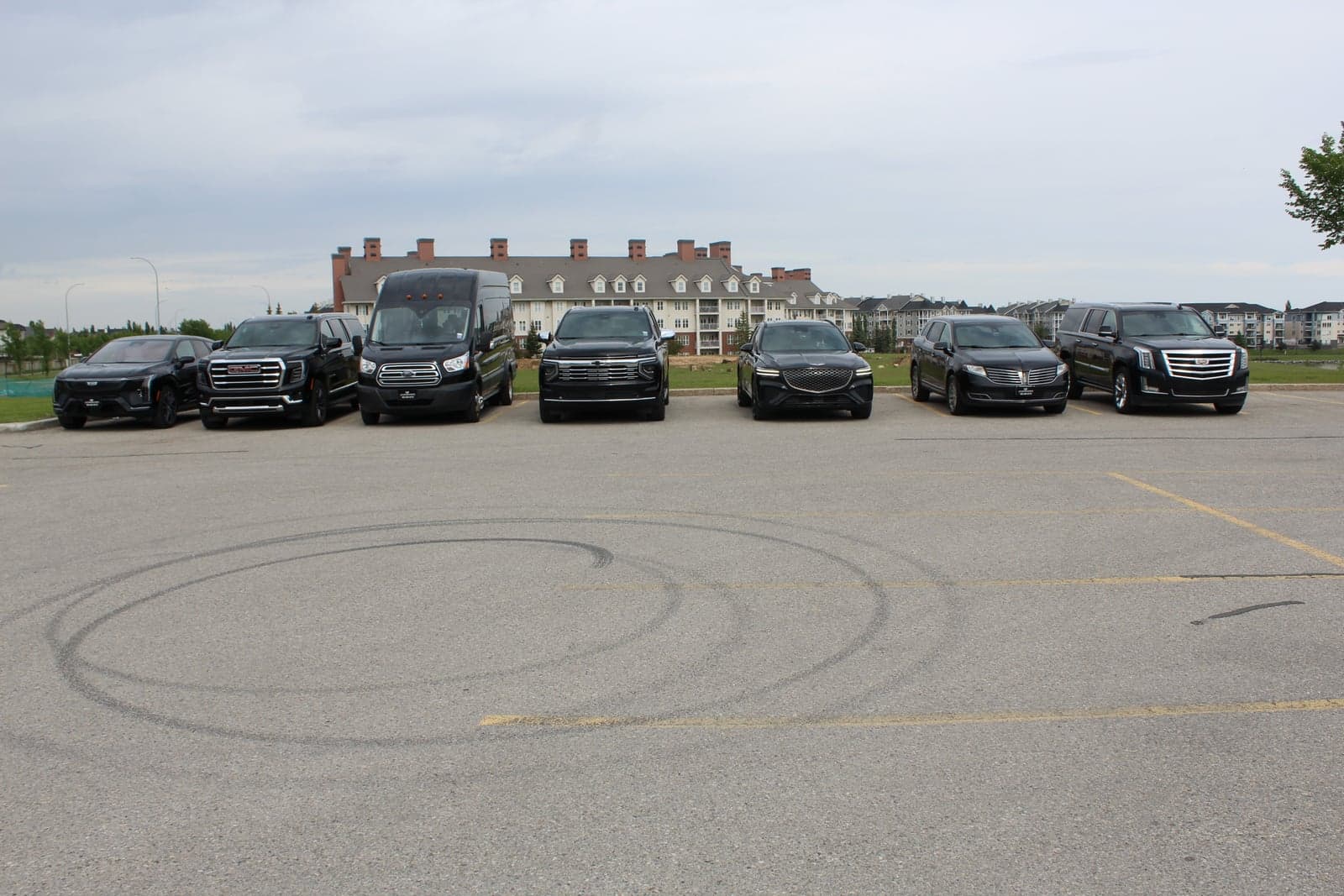
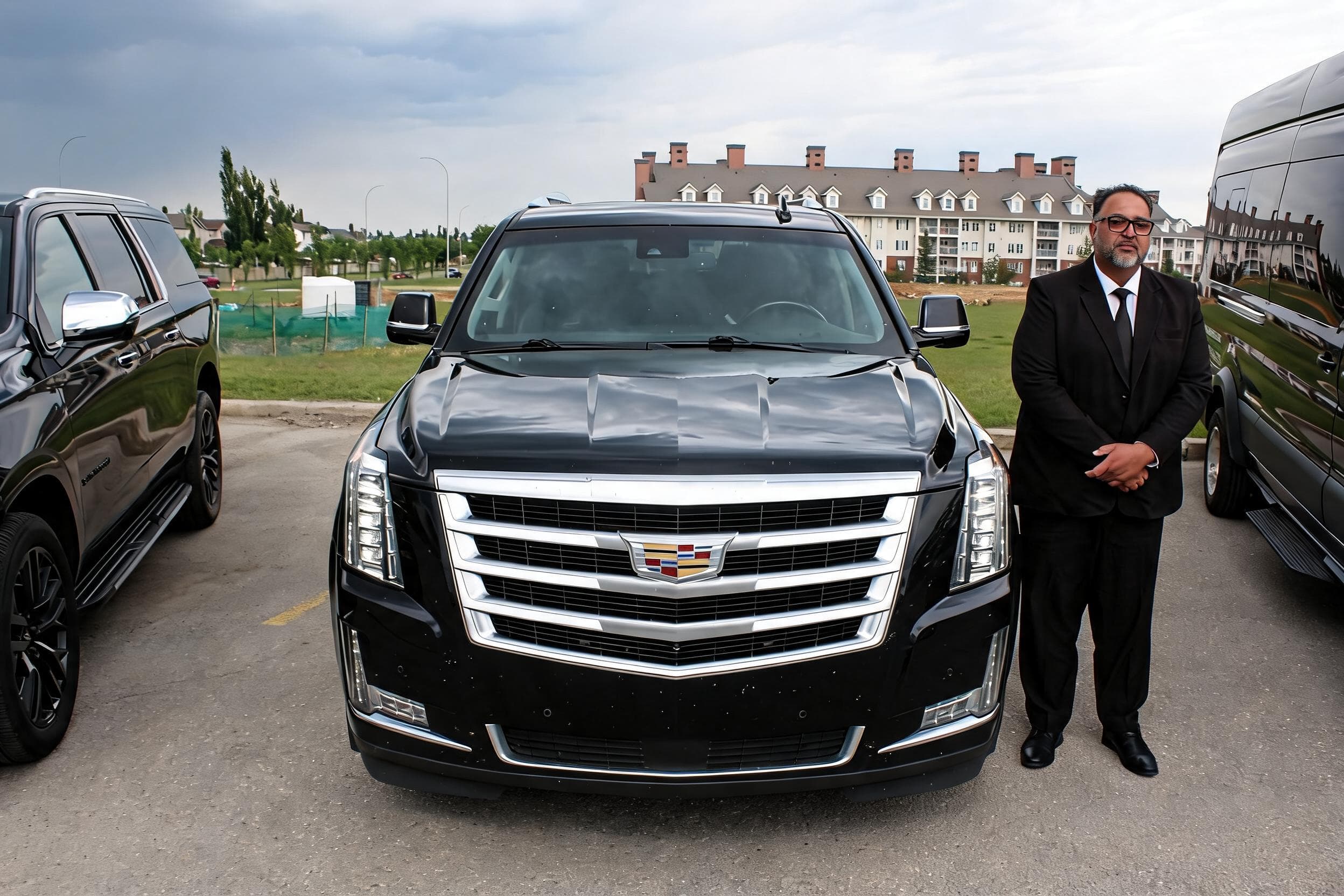
The argument against a long drive is that it burns a working day. In a chauffeured vehicle it does the opposite. A Cadillac Escalade, Chevrolet Suburban or GMC Yukon Denali gives you WiFi, quiet, a stable surface and room to actually spread out. Calls happen. Documents get reviewed. The deck gets finished before you arrive.
| Hours Spent | In a Terminal During a Backlog | In a Chauffeured SUV |
|---|---|---|
| Calls | Announcements, no privacy | Quiet cabin, take them normally |
| Connectivity | Congested public network | Onboard WiFi |
| Certainty | Departure time keeps moving | Departure time is yours |
| Arrival | Terminal, then another transfer | Door to door, no transfer |
| Rest | Airport chairs | Sleep on overnight runs |
The overnight play: for the long routes, leaving Calgary in the evening puts an executive at a Vancouver or Seattle hotel in the morning, rested, with the working day intact. It is the single most underused option in corporate travel and it costs nothing but a decision made early enough.
The Routes That Rescue a Schedule
Two patterns cover almost every disrupted corporate trip out of Calgary. Either you drive to a different airport and fly from there, or you drive the whole way. Both are single-vehicle runs with no connections and no baggage recheck.
| Destination | Approx. Drive | Best Used As |
|---|---|---|
| Edmonton (YEG) | About 3 hours | Domestic reroute or a direct meeting run |
| Kalispell (FCA) | About 4.5 to 5 hours | Fastest route into the US network |
| Great Falls (GTF) | About 4.5 to 5 hours | Quiet terminal, 24 hour crossing at Coutts |
| Spokane (GEG) | About 6.5 to 7.5 hours | Wider US carrier choice for rebuilding an itinerary |
| Vancouver (YVR) | About 10 to 11 hours | Overnight run, arrive for a morning start |
| Seattle (SEA) | About 10 to 11 hours | Long haul departures and mega-hub connections |
Full detail on each, including which carriers serve them, is in our alternate airports guide. For a fast decision framework during an active disruption, use The YYC Disruption Playbook.
Corporate Accounts and Priority Dispatch
The reason companies set up an account before they need one is friction. During a disruption, the delay is rarely the vehicle. It is the twenty minutes spent working out who can authorise the booking and how it gets paid.
What a corporate account gives you
- Named bookers who can dispatch without chasing approval
- Billing arranged in advance, not at 11 p.m.
- Preferences on file, vehicle type and pickup points
- Priority dispatch when demand spikes
- Flight tracking and meet and greet as standard
- 60 minutes free wait on airport pickups
- 24/7 availability, including overnight departures
- Licensed and insured, cross-border experienced
Write the One-Page Plan
Keep it short enough that an assistant can act on it without asking anyone. Five lines is usually enough.
The trigger
Name the moment the fallback starts. For example: any cancellation where the airline cannot confirm a seat that lands more than two hours before the commitment.
The authority
List the two or three people who can approve a ground booking on the spot, and say explicitly that they do not need a second signature.
The number
One phone number, in the plan, in the calendar invite and in the traveller phone. Ours is (403) 903-9975.
The default vehicle
Sedan for one or two, SUV for three to six with bags, executive van for a team. Decide the default now so nobody debates it later.
The document rule
Every traveller on a US-capable itinerary carries a valid passport in hand, not in a checked bag. This single line saves the most trips.
Set Up the Account Before You Need It
Ten minutes now means a five minute dispatch during the next disruption. Named bookers, billing on file, priority when demand spikes.
Corporate Accounts | Priority Dispatch | Cross-Border Ready
Cross-Border Business Runs
When the disruption is Canadian, the US network is the escape hatch. Spokane and Seattle in particular give you back the itinerary options that vanished at Calgary. The crossing itself is straightforward: your chauffeur plans the route and the timing, and in most cases everyone stays in the vehicle at the booth.
Document rules worth circulating internally
- A valid passport for every passenger, no exceptions, children included
- Passports in hand, never in a checked bag
- Staff on a non-Canadian and non-US passport should confirm US entry rules well before travel
- Coutts and Sweetgrass operates 24 hours, which is what makes overnight runs work
- Other crossings keep posted hours that your chauffeur plans around
The full walkthrough is in Cross-Border Chauffeur Service: Exactly How It Works. If you are moving a whole team rather than one executive, read One Van Beats Nine Rebooked Seats.
Matching the Vehicle to the Trip
Solo or Pair
A luxury sedan. Quiet, discreet and ideal for an executive who intends to work or sleep the whole way. Normal carry-on and checked luggage fits comfortably.
Small Team
A Cadillac Escalade, Chevrolet Suburban or GMC Yukon Denali. Three to six people with real luggage, demonstration kit or client materials, and room to talk through the meeting on the way.
Full Delegation
An executive Ford Transit van for up to twelve to fourteen passengers with full luggage. Conference delegations, sales teams and site crews travel as one unit on one schedule.
Multiple Vehicles
Above fourteen, we run vehicles together on a shared schedule so the whole group still arrives at the same time rather than trickling in across an afternoon.
Corporate Continuity FAQ
What is a ground continuity plan for corporate travel?
Can an executive actually work during a long drive?
How does a corporate account work?
Which destinations are realistic for a same-day business run from Calgary?
Do you handle cross-border corporate travel?
How much notice do you need during a major disruption?
Can you move a whole team, not just one executive?
Nobody plans a travel continuity policy on a good week. It gets written the Monday after three people missed a client meeting because a fleet was grounded. Writing it before that happens takes about an hour and turns the next disruption into a phone call rather than a crisis.
Set up the account now. Use it the first time you actually need it.
Keep reading: The YYC Disruption Playbook |Calgary to Spokane |Calgary to Seattle