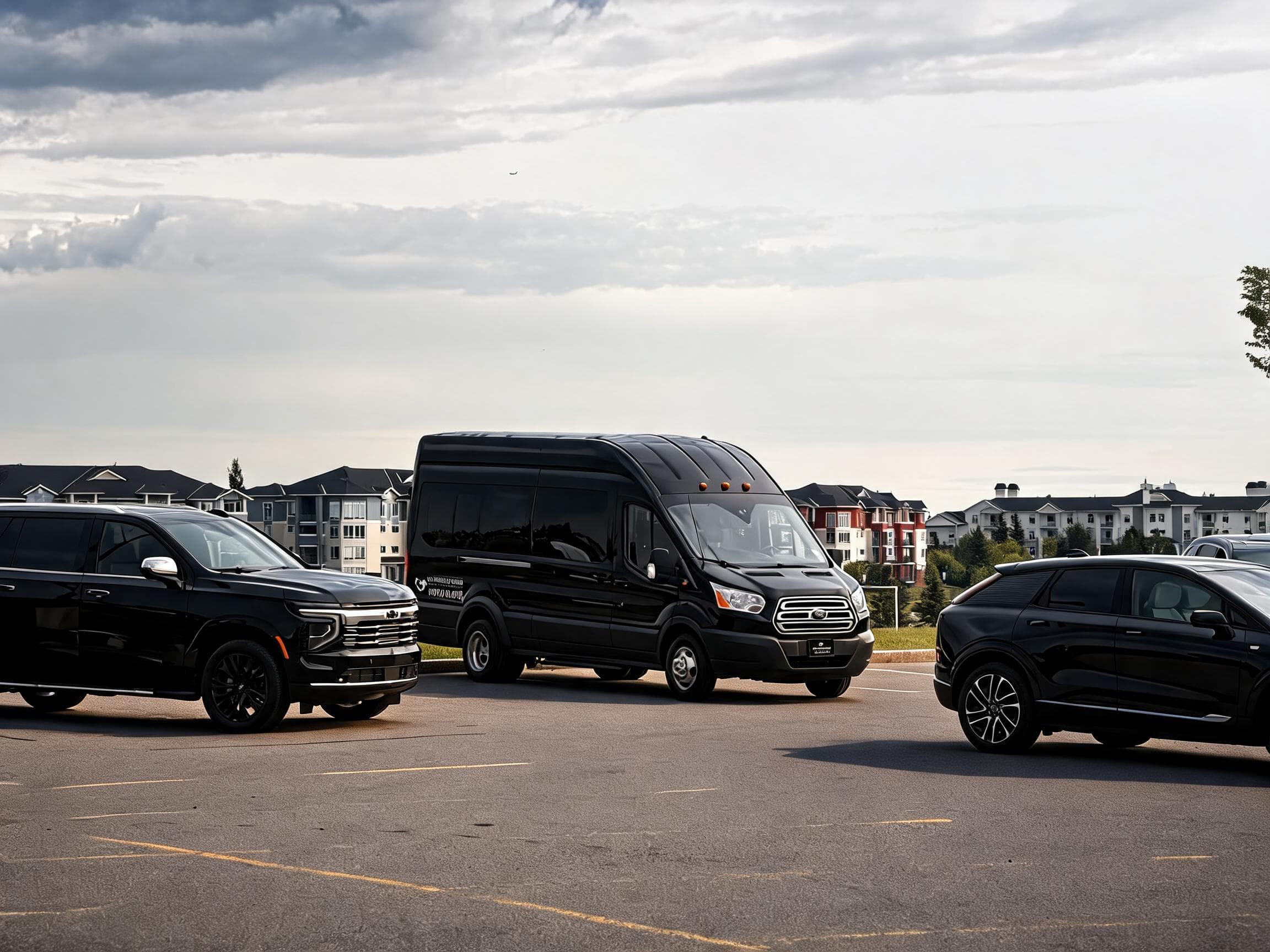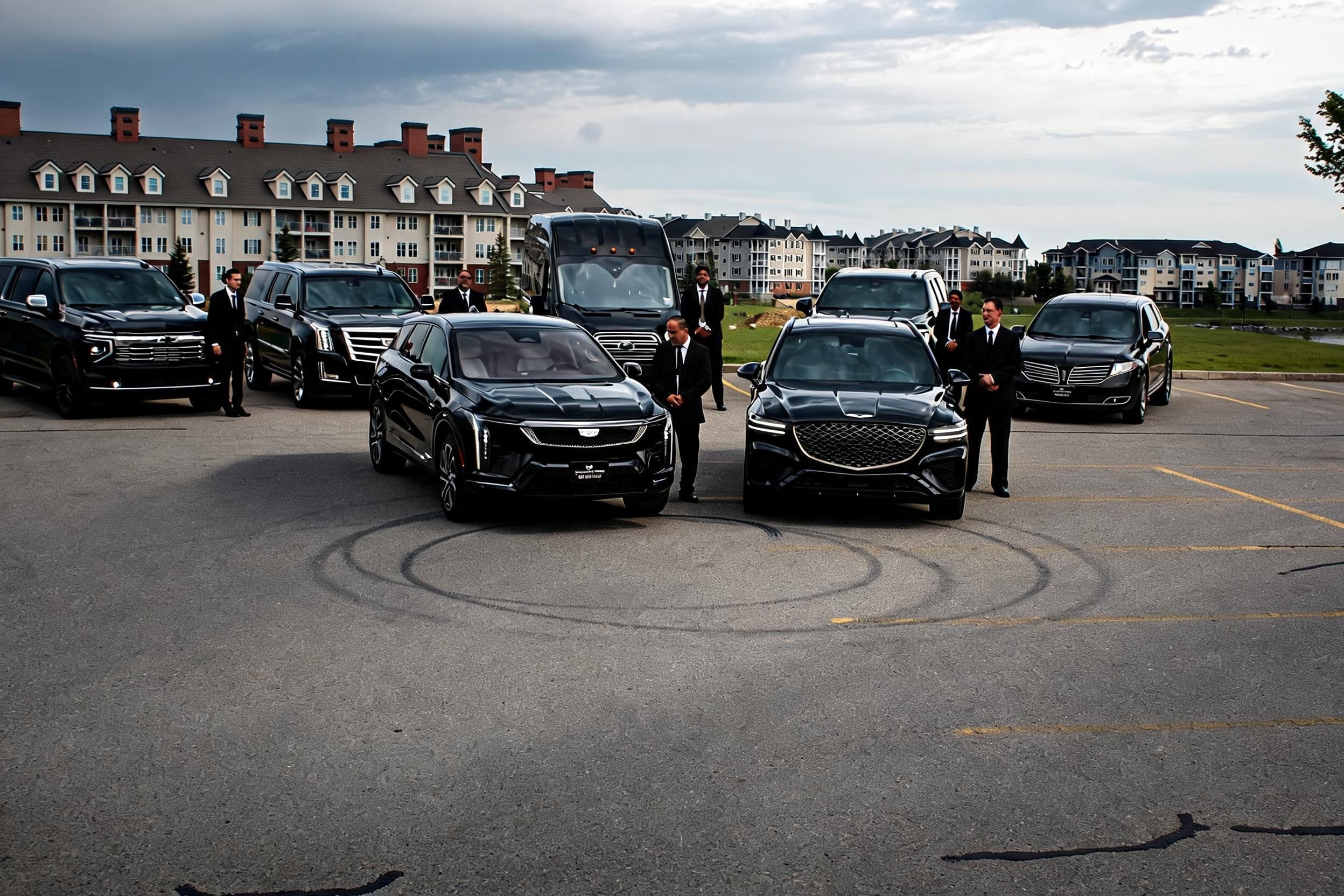
A 30 minute airport run forgives almost any vehicle choice. A five hour drive to Kalispell or an eleven hour run to Seattle does not. Legroom you barely noticed downtown becomes the whole trip, and a luggage compartment that was "probably fine" turns into a suitcase in someone's lap. This guide walks through the three vehicle types we run on long transfers and the questions that actually decide between them.
Start With Three Questions
How many people, really?
Count everyone, including children in seats. A group that grows by one after booking usually means a different vehicle, so tell us early if the number is soft.
How much luggage, honestly?
Large checked bags, carry-ons, ski bags, golf clubs, strollers, work cases. Luggage decides the vehicle at least as often as head count does.
What do you want to do for the next few hours?
Sleep, work, watch the mountains, or keep a group of twelve talking to each other. Each answer points at a different cabin.
| Vehicle | Passengers | Luggage | Best for |
|---|---|---|---|
| Luxury sedan | 1 to 3 | Light to moderate | Solo executives, couples, quiet working time |
| Cadillac Escalade | Up to 6 | Generous | Executive travel with presence, small families |
| Chevrolet Suburban | Up to 6 | Largest in the SUV class | Families with real luggage, ski and golf gear |
| GMC Yukon Denali | Up to 6 | Generous | Long mountain drives, comfort-first groups |
| Executive Ford Transit | 12 to 14 | Full group luggage | Teams, wedding parties, work crews, tours |
Capacities are the comfortable working numbers our dispatchers use, not a squeeze-everyone-in maximum. When a group sits right at the edge of a range and is travelling heavy, we will normally suggest the next size up rather than letting you find out at the trunk.
The Luxury Sedan: Quiet, Efficient, Underrated
For one or two travellers, a sedan is often the smartest choice on a long transfer. The cabin is quiet, the ride is settled at highway speed, and the whole thing feels less like a production than a large SUV pulling up outside a downtown office. If your plan for the next six hours is a laptop, a couple of calls and a nap, this is the vehicle.
Choose a sedan when
- One or two passengers, standard luggage
- You want the quietest cabin for calls
- Discreet arrival matters more than presence
Size up when
- Three passengers with three large bags
- Any oversized gear is coming along
- Deep winter with a full mountain route
Full-Size SUVs: The Default for Long Alberta Runs
The Escalade, Suburban and Yukon Denali are the vehicles we send most often on mountain and cross-border work, and the reason is simple. They carry a real family with real luggage, they sit high enough to see over the highway, and the second and third rows are usable for hours rather than tolerable for twenty minutes. On a run to Kalispell or Spokane, that combination matters more than anything on a spec sheet.
Differences worth knowing
- Escalade: the arrival vehicle, strongest for client-facing trips
- Suburban: the luggage champion, our pick for heavy families
- Yukon Denali: comfort-focused cabin for long mountain hours
- All three: bottled water, WiFi, room to work or sleep
The six-and-six rule: six passengers plus six large checked bags is the point where an SUV stops being comfortable on a long drive. At that number, ask us about a van. Nobody wants a suitcase in the third row for five hours.
The Executive Van: One Booking Instead of Three
The Ford Transit takes up to twelve to fourteen passengers with full luggage, and its real advantage is not size. It is that the whole group stays together. One pickup time, one chauffeur, one set of instructions, one arrival. No convoy to keep in formation, no vehicle that gets separated at the border and no headcount at every stop.
Teams, wedding parties, work crews and multi-family trips all end up here. If your group is stranded mid-trip, the logic gets even stronger, which we cover in one van beats nine rebooked seats.
Matching the Vehicle to the Route
| Route | Approximate drive | Usual pick |
|---|---|---|
| Calgary to Kalispell (FCA) | About 4.5 to 5 hours | SUV for families, sedan for couples |
| Calgary to Great Falls (GTF) | About 4.5 to 5 hours | Sedan or SUV, van for groups |
| Calgary to Spokane (GEG) | About 6.5 to 7.5 hours | SUV for space over the distance |
| Calgary to Seattle (SEA) | About 10 to 11 hours | SUV or van, comfort first |
| Banff or Canmore to FCA | About 4 to 4.5 hours | SUV for gear, van for resort groups |
Past about six hours, the vehicle choice stops being about style and becomes about how you will feel when you get out. Route details for the long ones are in our Calgary to Seattle guide and how cross-border service works.
Not Sure Which One You Need?
Send us the head count, the bag count and anything oversized. We will recommend the vehicle and quote it, no guessing at the curb.
Sedans | Escalade, Suburban, Yukon Denali | 14-Passenger Vans
Vehicle Choice FAQ
How many passengers fit in each vehicle?
Six of us fit in an SUV, so why would we book a van?
Which vehicle is best for working during the drive?
Can you carry skis, golf clubs or hockey gear?
Do we need child seats?
Is an SUV better than a sedan in winter?
What if my group does not fit in one vehicle?
The rule of thumb is short. Sedan for one or two who want quiet. Full-size SUV for families, gear and long mountain hours. Executive van when the group is big enough that keeping everyone together is the whole point. When you are genuinely between two options, size up. Nobody has ever complained about extra room at hour five.
Tell us who is coming and what they are bringing. We will match the vehicle.
Keep reading: One van beats nine seats |How cross-border service works |Calgary to Seattle